Section 2.4 · Topic 4 of 5
2.4.4 The three integral theorems
Looking back, the three theorems of this section are one idea expressed in three dimensions of "region": the integral of a derivative over a region equals the integral of the function itself over the boundary of that region. The fundamental theorem for gradients relates a curve to its two endpoints, Stokes' theorem relates a surface to its closed rim, and the divergence theorem relates a volume to its closed surface (Figure 2.4.11 and Table 2.4.1). In each case the derivative involved is precisely the one whose definition is "change per unit length", "circulation per unit area" or "flux per unit volume", and each proof consists of adding up infinitesimal pieces whose internal contributions cancel.

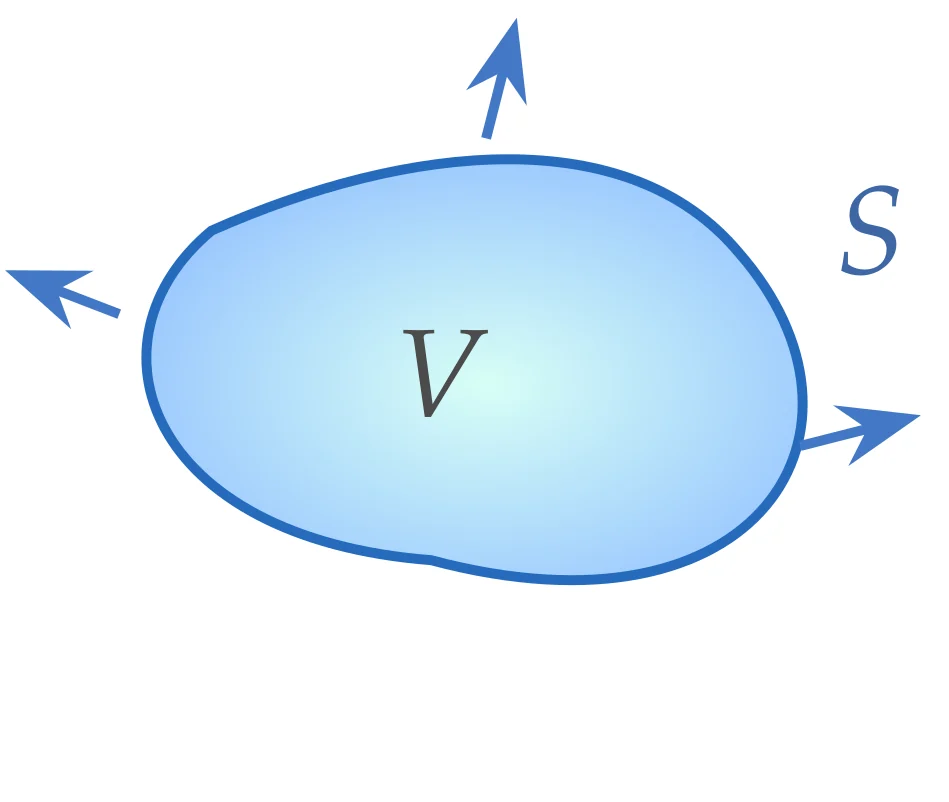
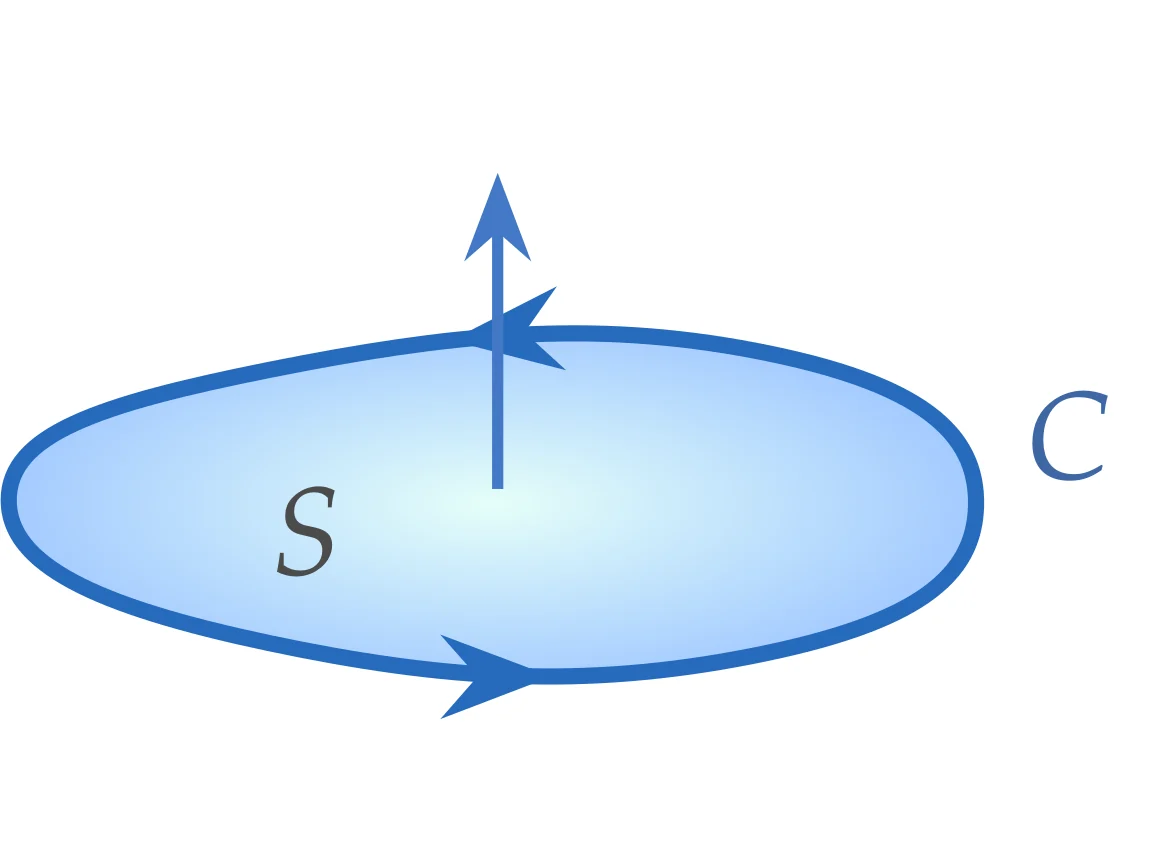
Table 2.4.1. The three integral theorems compared.
| gradient theorem | divergence theorem | Stokes' theorem | |
|---|---|---|---|
| region | curve | volume | open surface |
| boundary | two endpoints , | closed surface | closed curve (rim) |
| derivative | |||
| meaning of the derivative | change per unit length | flux per unit volume | circulation per unit area |
| orientation | from to | outwards | right-hand rule between and |
| consequence | , path independence | divergence-free zero net flux | curl-free zero circulation, same flux for every surface with rim |
| in electrostatics | potential difference from (Section 3.3) | Gauss's law, integral differential (Section 3.2) | , conservative field (Section 3.3) |
These theorems will be used constantly. In Chapter 3 (Sections 3.2 to 3.4) they translate Gauss's law between its integral and differential forms, establish that the electrostatic field is conservative, and let us compute potentials as line integrals of the field. Later in the course they do the same for all four of Maxwell's equations, which are statements about two divergences and two curls.